Outside in Rockefeller Gardens
- Jewish Hall of Fame / Sights, Sounds & Symbols Tent
- Garden of Eden
- Matzoh Baking Class
Inside The Casements
- Speakers’ Hall
- Holocaust Exhibit
- Life in the Shtetl
Holocaust Programmimg is made possible by a generous grant from Larry & Andrea Frank
“LIFE AS A HOLOCAUST SURVIVOR”
SPEAKERS’ HALL 11:30 AM
Suzanne Schneider
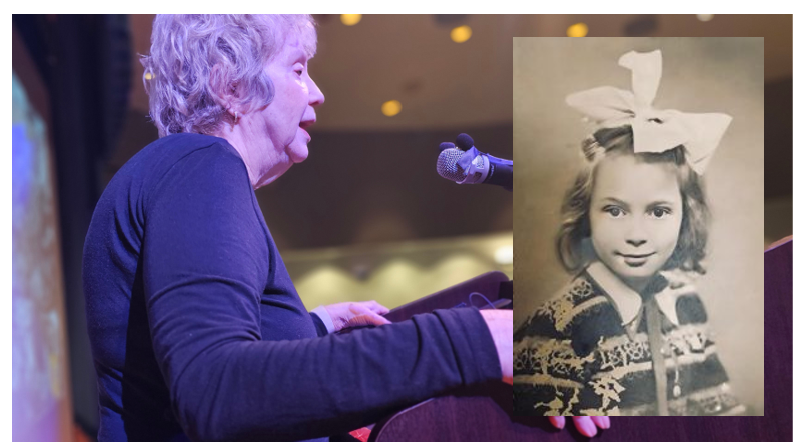
Suzanne Schneider is a Holocaust survivor born in Stanislawów, Poland, in 1937, who survived the Holocaust as a young child by being hidden with her mother to escape Nazi persecution. She and her mother spent nearly a year hidden in a chicken coop, a detail she shares to highlight both the dangers they faced and the bravery of those who helped them survive. Her testimony focuses on survival, the role of rescuers, and the importance of tolerance and historical awareness. She now lives in Central Florida and speaks widely with students and community audiences, often in alignment with education standards.
“HOLOCAUST SURVIVOR’S DAUGHTER”
SPEAKERS’ HALL 12:45 PM
Judith Rapp Hara
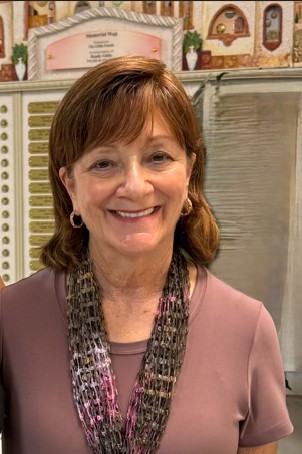
Judith Rapp Hara is the daughter of Holocaust Survivors, Ernest and Sylvia Rapp. Her book “Journey: The Story of Ernest and Sylvia Rapp” was written during the pandemic, honoring a promise made to her Father. The prologue tells about a life-altering meeting with a man from her father’s past. This meeting changes Judith’s outlook on life and starts her quest to find out about her family’s history. Judith will share Ernest and Sylvia Rapp’s story – an inspirational story of survival, faith, and perseverance. It is as relevant today as it was in the past. The theme “there are no coincidences” not only plays an integral part throughout the book but continues to play a role in Judith’s life to this day.
HOLOCAUST EXHIBIT
The United States Holocaust Museum states that The Holocaust was the systematic, bureaucratic, state sponsored persecution and murder of approximately six million Jews by the Nazi regime and its collaborators. During the era of the Holocaust, the Nazis, who came to power in Germany in January 1922, also targeted other groups because of their perceived “racial inferiority” such as Gypsies, the disabled, and Slavic peoples (Poles, Russians). Other groups were persecuted on political, ideological and behavioral grounds such as the communists, socialists, Jehovah’s witnesses and homosexuals.
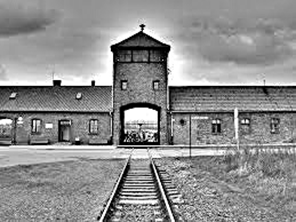
Between 1941 and 1944, Nazi German authorities deported millions of Jews from Germany, from occupied territories, and from the countries of many of its Axis allies to ghettos and to killing centers, often called extermination camps, where they were murdered in specially developed gassing facilities.
The Holocaust is a grim reminder of the senseless systematic murder of millions of innocent people and of all humanity lost.
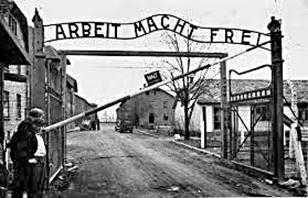
“Henriette’s Letters” – “Our Story” 12 photos and explanatory panels from the Holocaust Resource and Education Center in Maitland which tell the stories of 11 women who survived the Holocaust and then settled in central Florida. One of the survivors of Auzchwitz was Tess Weiss who founded and directed the very first Holocaust Museum in the United States, the Holocaust Resource and Education Center in Matiland. She passed in 2023.
Presentation by Stephen Poynor
USC Shoah Foundation’s Dimensions in Testimonysm enables people to ask questions that prompt real-time responses from pre-recorded video interviews with Holocaust survivors and other witnesses to genocide. The pioneering project integrates advanced filming techniques, specialized display technologies and next generation natural language processing to create an interactive biography. Now and far into the future, museum-goers, students and others can have conversational interactions with these eyewitnesses to history to learn from those who were there.
Henri Landwirth
Henri Landwirth was born in Antwerp, Belgium, in 1927 to a Jewish family. When Nazi Germany invaded Belgium in 1940, anti-Jewish laws quickly began to isolate and persecute Jewish families. Henri, his sister, and his parents were eventually arrested by the Nazis and deported.
Henri was sent to several concentration camps, including Auschwitz-Birkenau and later Bergen-Belsen, where he endured forced labor, starvation, and brutal conditions. Most members of his family did not survive the Holocaust. Henri was liberated by British forces at Bergen-Belsen in 1945.
After the war, Henri immigrated to the United States and rebuilt his life from nothing. He eventually settled in Central Florida, where he became a successful hotelier and community leader. Despite the trauma he experienced, he devoted much of his life to educating others about the Holocaust and speaking to young people about the dangers of hatred and prejudice.
His story is one of resilience, rebuilding, and the responsibility to remember. The exhibit helps visitors understand both the devastation of the Holocaust and the strength of those who survived it.
LIFE IN THE
A Presentation by Award Winning Photojournalist Karen Sandvick
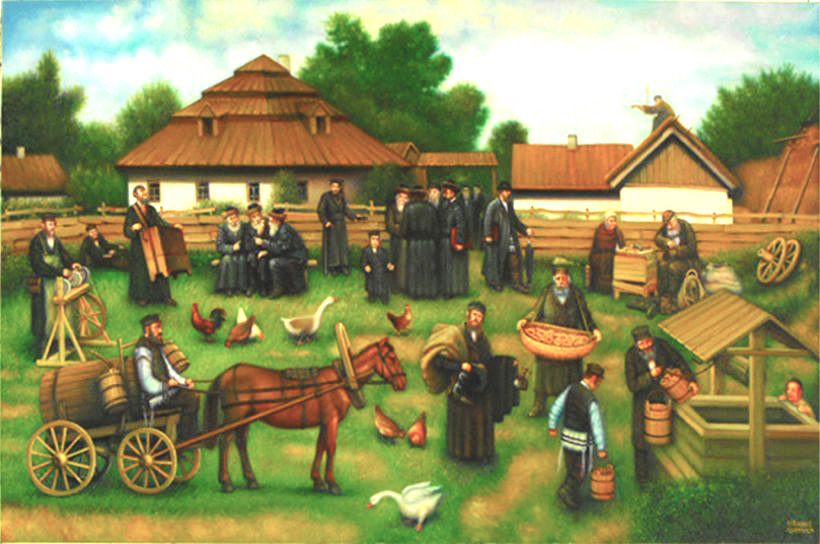
The history of the oldest Eastern European shtetls began about a millennium ago and saw long periods of relative tolerance and prosperity as well as times of extreme poverty and hardship. Not only did the Jews of the shtetl speak a unique language (Yiddish), but they also had a unique rhetorical style, rooted in traditions of Talmudic learning.
Pinchas
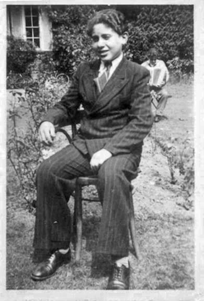
The program presents a Holocaust survivor Pinchas Gutter on a laptop not a hologram… and people can ask questions and the Holocaust survivor on the laptop responds. The Holocaust survivor’s answers were prerecoa

Stephen Poynor serves as the Director of Education at the Holocaust Memorial Resource and Education Center of Florida. In his role, he plays a vital part in helping Florida school districts effectively implement the Florida mandate for Holocaust Education through collaborative educator training, direct student instruction, and curriculum design. Notably, he also contributed his expertise to the Commissioner of Education’s Task Force on Holocaust Education, in the development of the new State of Florida standards for Holocaust Education. We will be showcasing Dimensions in TestimonySM which enables people to ask questions that prompt real-time responses from pre-recorded video interviews with Holocaust survivors and other witnesses to genocide. The pioneering project integrates advanced filming techniques, specialized display technologies and next generation natural language processing to create an interactive biography. Now and far into the future, museum-goers, students and others can have conversational interactions with these eyewitnesses to history to learn from those who were there.
“BASEBALL TALMUD”
SPEAKERS’ HALL 2:00 PM
Howard Megdal
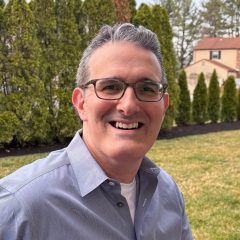
Howard Megdal is a journalist and editor who has worked hard over his career to equalize coverage between both men and women’s sports, while covering baseball, basketball, soccer and other sports. He is the founder and Editor of The IX Sports and the author of Becoming Caitlin Clark, Rare Gems, The Baseball Talmud and numerous other books.
He has written for publications including The New York Times, The Washington Post, Baseball Prospectus, FiveThirtyEight and Sports Illustrated.
A JEWISH HISTORY OF DAYTONA BEACH
SPEAKERS’ HALL 3:15 PM
Warren Trager